Pages

Thursday, 13 April 2017

Monday, 27 March 2017

Afrikaan

Cycling adventure: Camberra to Nowra


Friday, 24 March 2017

Tasmanian Wilderness


Family Motor Cycling History

I am gazing at a very old photograph   of a very old motorbike. Its taken round 1922 on the Walch to   Armidale road.Its a Douglas opposed twin motor with a  rectangular fuel tank, sweptback handlebars, and exposed  flywheel, a fairly primitive machine but it transported my   father Fred Williams round the northern NSW dirt  roads  in his job as a representative for Williams Bros Motors.


Now weather its genetic or not,I dont know but I took an   instant liking to riding on the back of Geoffrey's 500 CC   Tiger 100 twin motor bike when he drove through French's   Forest and down Tumble Down Dick,the acceleration of these   machines was very rapid from 30mph to 100 mph in 30   seconds,  The feeling of wind in the hair with   associated thoughts of freedom were very apparent . 
                 
This is 1948 , prior to regulations requiring motor Cycle riders to wear helmets       
                 
These machines were the fastest   500 cc stock motor cycle available. There was a faster stock bike, but it was 1000 cc V twin Vincent HRD ,capable of speeds  exceeding 120 mph.  The NSW Police selected Triumph Tiger 100 motor cycles for
 their Highway Patrols.

 At age 16 years and 10 months it was possible to sit for a   riders licence, this test was conducted in Hospital   Road, abreast of the Domaine by RTA officers. The test
 involved driving 50 meters down the road, making a U turn   without putting a foot on the ground, observed by the RTA officer standing in the middle of the road.

Most motorcycle riders would understand this required the rider to operate the hand clutch, change gear by foot controller ,one up and three down, apply the foot brake, and    give a right hand signal for turning. This is prior to   electric indicators blinking  direction changes, so one   hand had to come off the handlebars, where the accelerator   is located.Need I say more,    for a nervous   person the opportunity to dab a foot on the ground while   turning the handlebars, to prevent a fall, was just too
great. Needless to say I failed my test.


Eventually I secured my motorcycle licence at 17.Now all I   needed was a motor bike, and who better to help me than   father Fred.He negotiated a sale with Campbell street agents   Hazell & Moore, having worked in the area pre war,lent me   100 pounds and I rode home on a shiny new Tiger 100 motor  bike.

FAMILY MOTORCYCLE HISTORY

Family Motor Cycles History I am gazing at a very old photograph of a very old motorbike.Its taken round 1922 on the Walch to Armidale road.


Its a Douglas opposed twin motor with a rectangular fuel tank,sweptback handlebars, and exposed flywheel,a fairly primative machine but it transported my father Fred Williams round the northern NSW dirt roads in his job as a representative for Williams Bros Motors. Now wheather its genetic or not,I dont know but I took an instant liking to riding on the back of Geoffrey's 500 CC Tiger 100 twin motor bike when he drove through French's Forest and down Tumble Down Dick,the accelleration of these machines was very rapid from 30mph to 100 mph in 30 seconds, The feeling of wind in the hair with associated thoughts of freedom were very apparent .

Tuesday, 7 March 2017

modular, pre-fab and off-grid house profile

Friday, 3 March 2017

SALIGNA WOODLOT - The clearing and planting of a new planation, Kangaroo Flat (NSW, Australia)

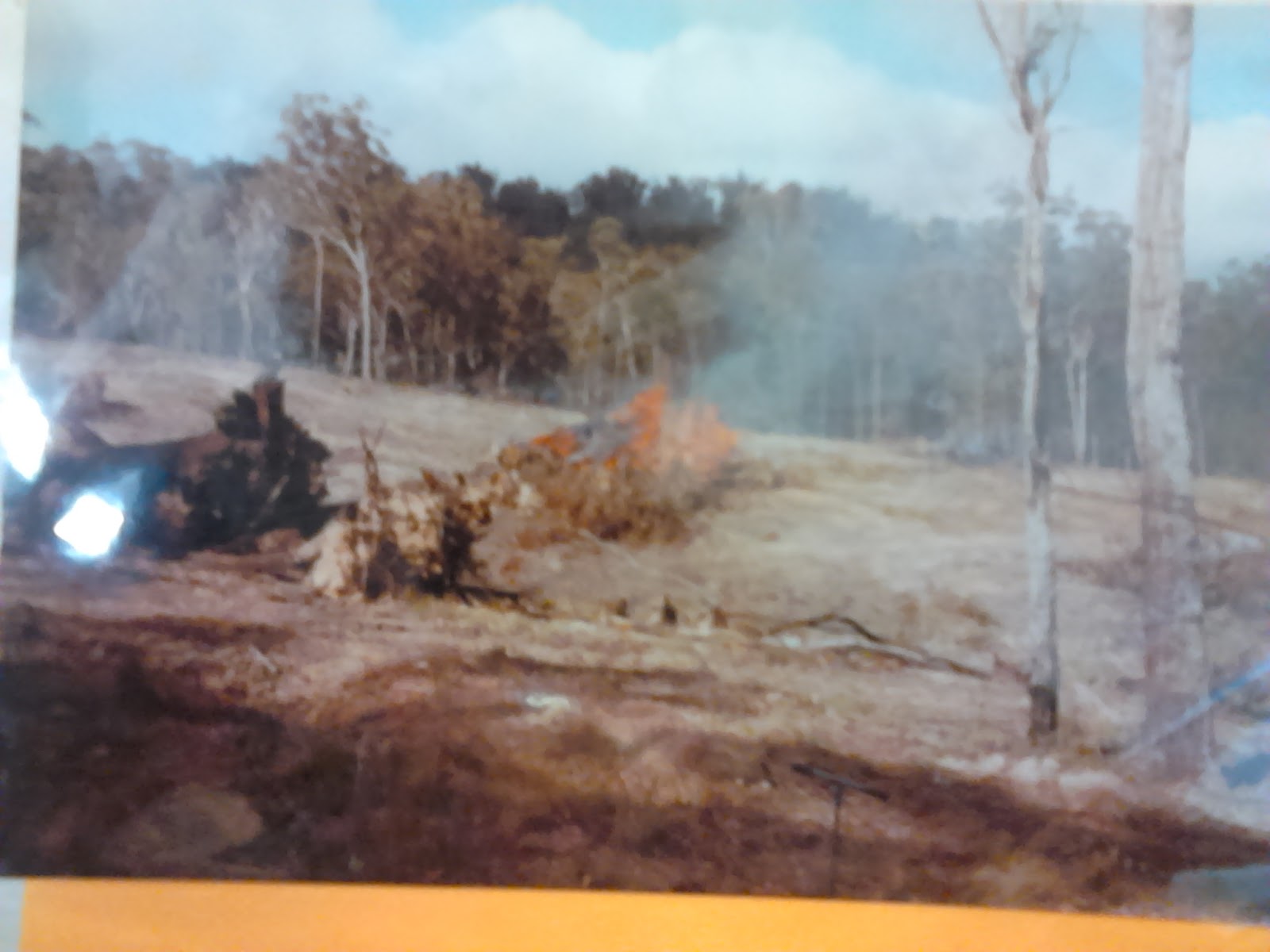
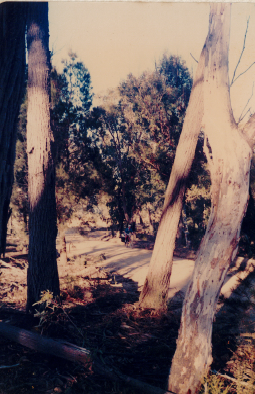
She approached me along the forest trail dressed in her khaki drill uniform from Greening Australia .I had rung asking for advice in the preparation of planting 5 acres of Sydney blue gum .Her name was Annabel Kater and with her camera we surveyed the land that had been prepared for planting. Bob Carr the then Premier who for political reasons had changed the State Forests regulations ,so former State Forests could be converted to National Parks ,a neat political trick to enhance his standing . Once done it achieved his kudos. Carr’s next step was to call on the landholders of the region to start planting trees to create a resource for the local sawmill at Walcha. I’m not sure if Annabel knew about all these political moves but she was certainly knowledgeable about species selection,Silva culture, weed control and the necessary methodology to accomplish all these practices. With camera she documented the slope in the land already conscious of the high rainfall on the tableland region and that Sydney Blue gum do well in this area. A younger man may have involved her in a relationship because she was attractive very easy to talk to and certainly friendly,but being old I accepted that it was better to stick to business practices and obtain the information that would create a successful wood lot Sydney Blue gum is of particular good flooring quality,in its mature state it can grow to 30-55meters in height,with a diameter at brest height of 2 meters . Exceptional species may attain a height of 65 meters with a girth of 2.5 meters,resulting in an excellent sawlog that the most emasculated sawmiller would salivate over. It is common in an area from the South Coast of New South Wales to as far north as the Eungella area west of Mckay in Queensland,growing to as far west as Carnarvon Gorge.it can survive in altitudes up to 1100 meters.This climate area is mostly warm humid with mean temperatures of the hottest month in the range of 24-33 degrees and mean minimum of the coldest round -2 to 8 degrees. The mean annual rainfall is around 900 – 1800 mm,with a summer maximum ,moderate in the south but strong in Queensland. Best development of this species is on good quality alluvial sandy loam,other soils pod sols and volcanic loam.Soils are generally moist but well drained. The species is characterized by its rough brownish to grayish flakey bark,retained at the base for 1-4meters ,decorating in long strips to leave smooth,blueish grey to white surface above .The Eucalyptus species is the most important genus of Australia forest trees with about 500 species,many are site sensitive and have edaphic preferences. The only shelter on Lot 29 Bloomfield road is a rough hut 6 meters by 3 meters fashioned from species grown on the block,milled at Long Flat to provide steeps to the loft,where the occasional possum rests from storms.The roof is rusty recycled corrugated iron,and flooring that can claim a 100 years of use.100 mm slabs decorate the exterior walls. Annabel and I shared afternoon tea and cake after our trevail,on the meager slatted deck ,discussing other species such as the wondrous cabinet timber Acacia melanoxlyn,or blackwood as it is known in the trade.All this talk must have made an impression because there is now a experimental grove of Acacia melanoxlyn grown from seed collected from a tree growing at St Ives,growing on the blook,but theirs is a 40 year cycle so wont be harvested by yours truly. Annabel was not exposed to the wondrous sounds that are audible at Saligna at night,unidentified birds hoot,dingoes howl,possums fornicate in rapturous delight,the odd bull sends out a call for company,the place come alive all that is missing is David Attenborough’s commentary. The final chapter to the saga is the sawmill closed down,so there is 5000 square meters of structural building timber,possibly enough for two sustainable houses,left talking to nature,I hope they have the language right. ©copyright T. Williams

Centenary Celebrations of Edgecliff Preparatory School (1912- 2012)


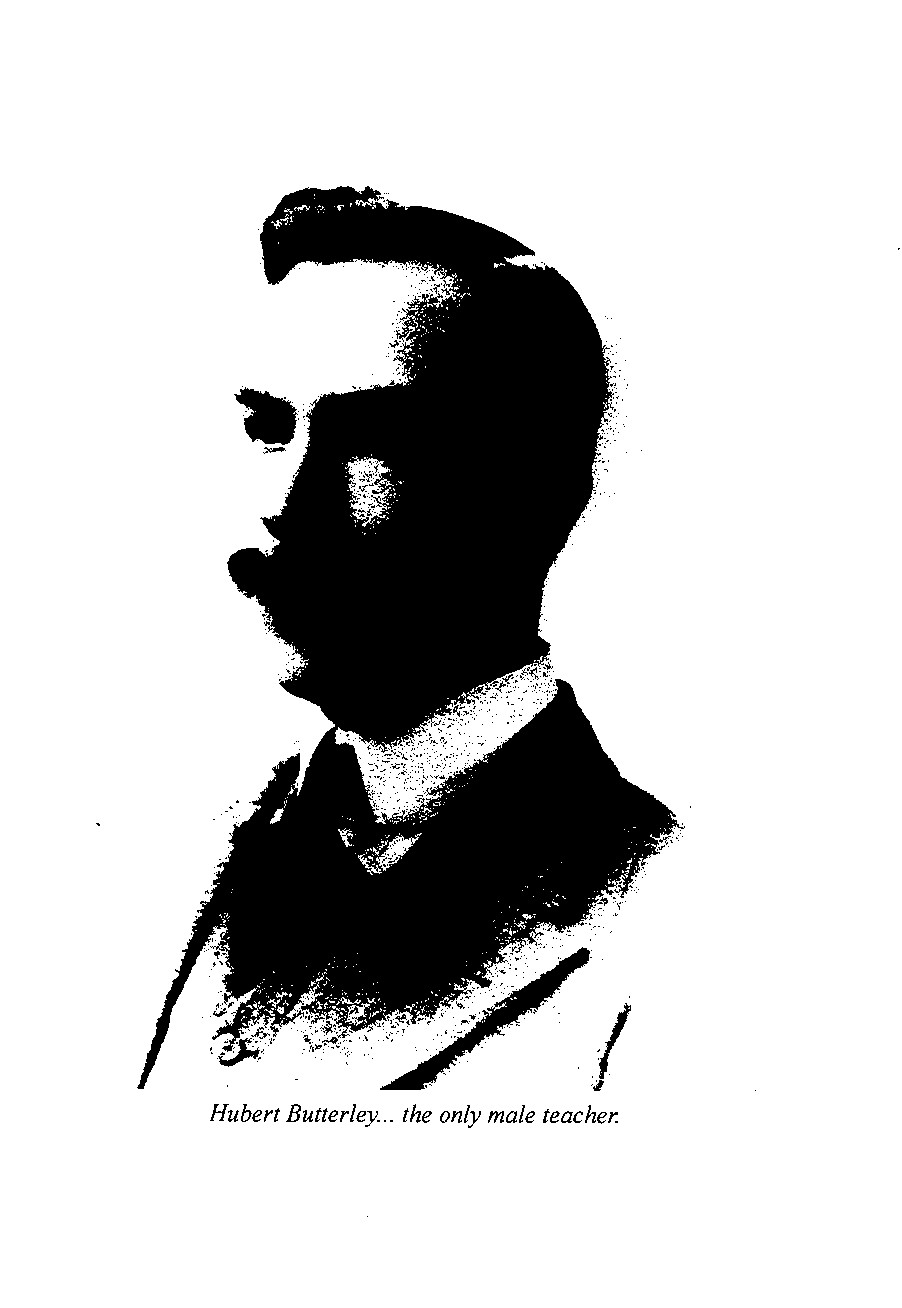
Sir Huber Butterely


Edgecliff Preparatory School Reunion 2012, Celebrating the School 100 year


Friday, 24 February 2017

Miranda Community Garden


My garden only grows one vegetable, tomatoes. But it can produce some fruit, Guavas, Bananas, and Avocadoes spasmodically, it’s quite sandy soil and a bit of a jungle.
So it was with much anticipation that my journey to Miranda to see the Community garden would deliver. A short walk from the station up Kiora Road to the Kingsway, left turn and a 100 meters to traffic lights which allowed pedestrians to cross and face Central Road.
Arriving in a suburb packed with high rise buildings, it’s a great relief to find an oasis, in the form of raised garden beds, fruit trees, green water tanks and an irrigation system, and worm farm, plus a group of friendly calm enthusiastic volunteers.
At the introductory ceremony 22 souls discussed the garden management, there I met Joan, Brien, Lindsay and Jan. It all seemed quite democratic and a little aspirational, with visitors coming from the local Kids 4 Kare Kindergarten and other interested volunteers. A photo album recorded the garden's history from establishment, on land owned by the Uniting Church.
10 raised garden beds built of thick timber slabs filled with dark soil, compost and liberal dose of horse manure, provided the growing medium.
Rock melons wallowed in a bed of lush green leaves, they looked prolific, but had not yet reached their maturity date. The beans had delivered several crops and had climbed their trellis, showing many white flowers. I am told the corn crop had been good. Tomato beds were delivering varying quality from small to monsters. There were watermelons, pumpkins, peppers, egg plants and figs protected by netting.
There is always some produce to be distributed amongst the volunteers, and in some case produces made into jams and pickles, stored in jars for sale.
All this is protected by scarecrows made by schoolchildren entered in various competitions.
On my way home I called at Ted's Photographic and had my days activities printed. The day was enhanced with quiet reflection, sampling my Miranda Community Garden pickles, biscuits cheese and wine.
Tim Williams


Friday, 28 October 2016

COUNTRY ROAD TRIP SPRING 2016

     It is always interesting to move out from your safe home environment in the city and travel along country roads to establish what is taking place in country Australia. I was fortunate in having such an opportunity with a Toyota Camping van of 2694 engine capacity equipped with bed, gas stove, water container and folding chairs. All that was necessary was a couple of crates of food and a couple of bottles to wine to celebrate any meeting with friends.

  My first stop was to be Kangaroo Flat to examine the progress of my E.saligna trees planted as a resource for the local sawmill, under Bob Carr’s instruction. The route would be the Bucketts Way, a scenic route through Stroud passed the Stratford Coal mine through Gloucester , Barrington for petrol ,along Thunderbolts Way through Nowendoc turn right at Brackendale and right again at Tia on to the Oxley Highway. Something I learnt along this section of the dirt road, the vehicle is not dust proof !!     

   Once on the Oxley Highway its straight east to the Wirrakimbee National Park turn off , and 20 k’s down Kangaroo Flat road to Bloomfield Road, with its 9 letterboxes of contrasting origin.

 The trees were doing well, but the little timber hut, with loft is suffering from lack of love.

 After pruning the grove of Tasmanian Blackwoods it was off to Tia.

 Because the Tia reserve provided some amenitie in the form of a fireplace and a supply of firewood and toilets I decided to camp the night there, and do the two short walks in the morning to the dramatic Apsley Gorge and swimming hole.

    In Walcha I hoped to catch up with Tom who had sold his cattle property at Watsons Creek and was in transition to Walcha, but a hand injury with a doctors visit disrupted this plan. The remaining business was a call at the Council to enquire of subdivision possibilities of our property.

   My next call was Bellingen and I was advised to take the Waterfall Way, so drove to Uralla passed the Historic Foundry now closed to Armidale with a stop at the Hillgrove gold mine through Ebor and its waterfall, to Bostobrick ,where I picnicked and camped the night in the forest. I wanted to photograph the 600 year old Tallowwood tree in the Norman Jolly Memorial Grove. Oh what a sight for tree lovers !

  The next day it was on to North Dorrigo after a feed of muesli and yoghurt. This is really attractive country of rolling green hills, healthy cattle and the odd ploughed red earthed paddock waiting for its potato seeds.

   Having read some history of the sawmilling towns of Megan and Cascade I diverted north passed the Dangar Falls to see what had become of these once thriving towns but found that there was little activity except for the odd school. Continuing down Waterfall Way the road is steep and windy so low gear is a precaution till arriving at Thora beside the Bellingen river and its treelined drive to the attractive small town of Bellingen. A little detective work was necessary as I did not have Fran’s address so called at the newsagents and post office without success, but a brightly coloured real estate agent’s office Rob Hamilton came to the rescue as had sold Fran the land and gave me directions to the top of the hill.

   We spent a couple of hours catching up with news of their new life in the country ,enjoying their new solar powered house with its north facing aspect and distant views plus a productive vegetable garden . There was  morning tea photos to take and a gift of home grown bananas, a very stimulating morning.

Now it was only a short drive to Damien’s at Boambee, he had promised me a sail on his Hartley trailer sailer on the Clarence River and so the next day Saturday we hitched up the trailer and drove to Ulmara where there was a steep ramp to launch .This operation was a little tricky and best done at high tide ,as the ramp did not extend far enough for successful low tide launches .

   After an hour tied up to the little jetty we rigged the boat loaded our food ,gas stove and sleeping bags and we ready to sail. Fortunately there was a good south westerly breeze so heading north to Laurance was an exciting sail, little traffic other than the ferry and the odd shoal to contend with. Sailors are bound when making shore to visit the nearest pub so true to convention we had a drink at the Laurance Hotel.

    As it was getting late in the day and the breeze had dropped we motored to our next destination Brushgrove and tied up at the new pontoon wharf . It was only a short walk over the bridge to the little old country pub for a Saturday night dinner. There was music in the air and a sense of fun as most of the locals had come for a good time. Damien and I enjoyed a slap up monster seafood dinner with drinks the dining room and as the bar was full it looked like Brushgrove would swing night.! We spent an uncomfortable night on A Touch of Class trying to get comfortable in cramped conditions requires training, so at daylight Damien brewed a batch of tea and we motored back to Ulmara through the mist on a very calm river .

   Once again Damien demonstrated superior culinary skills and cooked bacon and eggs while tied up at the jetty. It was then the job to lower the mast and float the Hartley on to the trailer positioned at the bottom of the ramp. Once secured we could take the boat out of the water up the ramp and park in the street near the pub Time for coffee on the banks of the river with friends Neil and Lin while watching the waterski race down the Clarence river towed by throbbing engined speedboats.

   Back to Boambee to park the Hartley in the shed and get a decent nights sleep.

   An old school friend and his wife had moved from Sydney to Coffs Harbour to be near their children’s families, so before heading further north I called on Louise and Peter to see how they are making out in their new unit overlooking Coffs Harbour . The only formality was morning tea as we exchanged news I was presented with a jar of their daughter’s Anabriar Honey made from the bees at Kremnos which is delicious.

   My last call was to Dianah and Mick’s hill top farm overlooking Woolgoolga only a short drive away ,but with a different entrance as the freeway has been constructed to bypass Woolgoolga. This is a house I much admire built in the Greek style with swimming pool complete solar generating unit as they are off the grid. Surrounded by bananas, avacado trees and berry farms and distant views of the blue Pacific ocean.

   We picked avacadoes, collected eggs and surfed at the local beach and I had fun throwing an orange for Geoffrey their new dog who is full of energy and playfulness and loves chasing oranges in the orchard. We took in the view from the headland and lunched at the Coffs Harbour Surf Club with whales presenting in the ocean abreast of the beach much discussion and a little therapy, who would not appreciate such a wonderful holiday.

 The return journey along the freeway was only broken by coffee at Kew and lunch at Raymond Terrace, so a total of 1614 k’s,no accidents and approx. $150 of gas, with a batch of pictures for memories.

Wednesday, 13 January 2016

Are We There Yet?

Our family have been to Tasmania twice before, one occasion we exchanged our house in Sydney for one in Sandy Bay Hobart ,when our boys were young, this allowed us to take daily trips, either north, south west or east, exploring different regions.

The second occasion was with a student friend Simon, we had just completed our Hawkesbury Agriculture College, horticulture certificate and celebrated by walking the Cradle Mountain to Lake St. Clair track, an amazing adventure.

We felt we knew Tasmania relatively well but this time we would take a more contempary approach ,as we had a granddaughter ,on board ,so travel arrangements can vary considerably , the plan was to visit places we had not seen before.

A short 1 ½ hour flight from Sydney ,we landed in Launceston ,taking time to admire the Blackwood timber airport ceiling and bench facing, which Tasmania is famous for .We hired a Mitzibishi 4 wheel drive Outlander ,and set off in a north easterly direction on the Bass Highway for Stanley.

Noticing a billboard sign for cheese tasting, we pulled into Ashgrove amongst the coloured concrete cows hoping to sample the cheese with some cider. The merchandising arrangements were fractured and you could only buy separate articles in separate sections .So we settled for cheese and ham rolls with tea for early lunch.

The highway system was good allowing us to cover kilometers at pace in safety, we turned off the highway at Penguin, to stretch the legs, admire the church, share an icecream and photo opportunity with the giant foreshore penguin dressed in his knitted jersey.


Stanlet ready for our fish and chips
                                                                                      Penguin talking to a local
We turned off the highway when near the rugged coastline, attempting to identify irrigated flower crops growing in rich volcanic soil.

Reaching Stanley late afternoon we booked into the 168 year old Stanley Hotel in Church street, and after cider in the small bar made our way to Hursey’s Seafood for a feed of calamari ,prawns, abalone with fish and chips, taken with a glass of Tasmanian white wine, we enjoyed the meal so much we went back for seconds of more chips.

Any seafaring ghosts were on holidays and did not disturb our sleep but we were on the job early with a visit to the supermarket for breakfast provisions ,cheese,cucumber,lettuce and carrot roll (hopefull burpless)and our picnic lunch.

8.15am start for Woolnorth,the original 350,000 acre grant to the Van Diemans Land company in 1832,but now reduced to 35,000 acres managed by Fonterra of New Zealand ,for dairy farming. We filled with petrol at Marrawah, a famous west coast surfing town and headed south through wind swept heath country to Arthur River then Nelson Bay where we took a closer look at the beach hopeing for surf ,but found the original Ozzi hermit camped with all his amenities beside the beach and living off the seafood and oysters.

We found a picnic spot beside a rock encrusted beach where we could paddle our feet in the Southern Ocean ,but had not realized how cold the water would be. Our purpose was to take the Tarkine drive ,so we turned east to follow the drive ,to Sumac lookout ,where the view over this wilderness forest and meandering river prompted a photo.
Tarkine forest


                     Tarkine forest

Continuing on till we came to a reserve with short walk passed Lake Chisholm ,formed when the geology sank thousands of years ago and vegetation formed a plug to retain the water in the lake. This was a majestic walk amongst 1000 year old trees with only filtered light reaching the forest floor.

The return journey was through more dairy country ,with large 300 herd dairy cows marching resolutely to the dairy bails to deliver the days rich milk production These enterprises with large silage storage under black plastic and tyre dumps ultimately delivered to the Edith Creek production factory.

By the time we reached Smithton we were parched ,so it was milkshakes all round.
The climax to the days travel was the evening picnic at Stanly beach park ,among the hussling seagulls. There was a barbecue ,tables and bench seats shaded by Norfolk pine trees and handsome stone wall with timbertop. We ate a splendid chicken salad ,boiled eggs with ginger beer juice and wine ,prepared by Lin.

The sign at the beach front had stated that this was penguin habitat, and on a normal night you could observe the penguins coming ashore after dark, to their rookery. Although we waited till 10pm the penguins did not appear, possably frightened by tourists torch lights flickering in the dark.
Tuesdays breakfast of tea and cheese and carrot roll was in preparation for the long 500 kilometer plus drive to Hobart ,but first some photos of the Stanley hotel and a meander down Church street to admire some of the quaint old English style single storey shops and houses. By 8.15 am we were packed and on our way.

At Chrismas Hills we were attracted to the thought of raspberry cake, so stopped for refreshments tea/coffee and cake on the outdoor timber deck while Naomi explored the outdoor play area. Ross with its historic old bridge built in 1836,its avenue of trees and old sandstone houses was an attractive setting for our picnic lunch in the main street. We observed sensitive restoration work was taking place before our very eyes with thoughtful landscaped tree planting. You could buy a old heritage listed sandstone building in Church street for $500,000.

Picnic in the main street of Ross a heritage town in the Tasmanian midlands
Heading down the Midlands Highway through Oatlands we decided to take an alternative route at Jericho, we turned off towards Colebrook ,this was hilly sheep country ,and the twisty road required the driver to be alert to the turns and tight corners it presented, with views of the Coal River valley, we passed through Campania, more shearing sheds ,but suddenly as north country folk would say “ we cumupon a wine tasting opportunity.

Lin and I were keen to explore this attractive old Georgian house, old stone barn and cellar ,so parking in the treelined car park, leaving Josh and Naomi outside, we decended into a cavernous cellar in anticipation of sampling their offering, and were greeted with “How has your day been” and a Sav.. blanc.

I know very little of wine production, but have sampled a few drops ,generally with a meal, of very appertising wine ,this certainly tasted good and I was happy to talk to the proprietors about their wine in the hope I could expand my knowledge. Suddenly my tasting partner had disappeared ,possibly frightened by the price of $24.00 for a bottle. What could I do, besides a hasty retreat to the carpark. Unfortunately I had not taken my camera into the wine cellar so came away without photos of this priceless property.

On top of Mount Wellington overlooking Hobart
Our next hurdle was overcoming the peakhour traffic of Hobart to find our Airbanb accommodation at Battery Point. Our enterprising navigator armed with mobile Google map, steered us to the Colville street unit complex into the arms of our host ,who presented us with the keys to our two bedroom unit with balcony, this was our home for the next three days.
While Josh and Lin went grocery shopping at nearby Sandy Bay road retail area, Naomi and I wrote Xmas cards with cute drawings.

After noodle soup,we were keen to explore the area ,being a mere 200 meters from the Derwent River. What would we find at the jetty and small beach ? Lin hit the jackpot with a dozen oysters and 24 muscles which we ate after cooking in boiling water.
Wednesday it was morning tea and toast on the balcony to greet the day ,followed by muesli. The plan was a visit to Mt Wellington ,involving a 25 kilometer drive up a winding narrow road ,with fauna creeping from one side of the road to the other .Only for patient drivers were echidna able to traverse their path.

Finally on top of the mountain we encountered telegraph and weather collecting towers, a stone and glass observation hut and a crowd of tourists. A couple from Holland requested a photo of my now 12 month beard which resulted in some Dutch discussion.
We were up in the clouds ,traversing the area on wooden gantry decking ,but had to wait for the clouds to clear before we could photograph the Derwent River and its bridges. After lunch we took a siesta in preparation for the afternoon walk along the river track to Salamanca Place.

This is a historic part of Hobart beside the Constitutional Dock, where old sandstone warehouses have been restored into a upmarket retail and restaurant area .featuring outdoor tables and chairs in the wide street.

MONA  artgallery

Mayfield Aboriginal midden

St Mary's hotel

Derby

Cateract dry stone wall Launceston

Launceston cateract park


LITTLE FLIGHT BIG FRIGHT

Twas to be a quick run from Archerfield to Redcliffe, change a couple of tyres and return. The weather was pretty ordinary but it is only a 15 min run and I could see the TV towers on Mt Coot-tha, well most of the time anyway. Being a- cautious PPL I rang Redcliffe for a weather appraisal, yep there was someone doing circuits, should be OK.
Grabbed a handful of tools, tyres and tubes and headed for AF, the scene was completed by the thongs, stubbies, 1960's T-shirt and a VTC tucked firmly under the arm. Daily inspection complete, 300 min endurance, probably enough! Off I went to the wild blue, oops, gray yonder.
Climbed out to 1500' in the lane to the North, whats this! maybe I shall descend just a smidge to maintain cloud separation. Gave the 10 mile inbound call to Redcliffe but what is this I see on track, nothing really just a small rainshower, descend a little and stooge on through.
About 900, enter the 'shower' but hold the phone; someone has very unkindly taken the world away. Sure enough the ground, the horizon all gone , (expletive deleted), what now? Not a prob a gentle turn to the left cos BN CTR just to the right and we shall pop straight back out. Well of course we will pop straight back out after all we have only just entered this minor inconvenience, OK we have done well, we haven't believed our brain that says the aircraft is in a steep descending turn cos we remember our instructors saying "Fly the bloody aeroplane and believe your instruments!", so after a few seconds of mental gymnastics we realize that the aircraft is under control and on a reciprocal heading so we shall pop out of this any time now, well it really will happen any time now, won't it? Let me re-appraise my situation, I am heading toward Mt Coot-tha at about 1000' in cloud, to the East is BN CTR to the West are even higher hills to the North the wx was very sad indeed and BN CTA is beginning at 2000'above my head, (expletive deleted). Another fine mess you've got me into 011ie. Well at least I can climb to 1800' and that will miss the hills, but now I know I am really in IMC. Hang on all is not lost I read in all the crash comics where the gang from BASI said we are there to help and when you need it ask for lt don't be a hero! OK here goes. "Brisbane this is ??? request radar vectoring due somewhat sad visibility ".
"??? are you in VMC, and what is your position?"
"Negative and to the South of Lakeside racetrack"
"Squawk code 6000 with ident". Feverish turning on of transponder, changing code and identing. Keep the bloody scan going, 15 deg bank even in that short interruption.
"??? identified, climb to 2500' heading 220, contact BN approach on 124.7 do you have instrument experience?"
" 2500' heading 220 and experience is night VFR, ???"
"??? keep the wings level, we shall bring you over BN into clearer skies"
"??? descend to radar lowest safe 1800' and track 110"
"??? 1800 leaving 2500" (might as well sound professional!)
As I reached 1800 the world returned, well maybe not the world but BN did.
"??? can you maintain visual to 1500?"
"Affirmative, by the way I can see that Redcliffe looks OK can I return there?"
"Negative due conflicting traffic, track direct to AF visual at 1500" "1500 direct AF, thanks for your help ???"
An uneventful return to AF followed, thought may as well own up straight away so reported to briefing and suggested that maybe the SOC may want to have a word in my pinky. He was busy so left name and number for later. 2200hrs that evening phone rings, sleepy hello, "CAA here I believe you were the pilot in command of an aircraft that went IMC in BN control!" So then when MY brain regained consciousness a rather long discourse followed with I may add a very pleasant and realistic guy from the CAA:. The following day there was some more communication and then I was advised that CAA would advise BASI 'and that whilst it was regretted that I was silly enough to press on when the weather deteriorated, it was greatly appreciated that I had owned up and asked for help before there was a major drama. I have subsequently received a letter to this effect.
In summing up, I would recommend that my experience be a lesson for other novices like myself, and firstly avoid the situation, BUT should you find yourself inadvertently in IMC believe the instruments and not your head, because I can assure you that disorientation is very real.
Also my experience of the helpfulness of the CAA was very encouraging and therefore if you need help, ask for it!
SAFE FLYING Jonathon Livingston Seagull.
PPL provisional pilot licence: Private pilot licence
Bn ctr: Brisbane control zone
Wx: Weather
Imc: Instrument meteorological conditions
Basi: Brisbane Air service info/Bureau of air safety investigation
Vmc: Visual meteorological conditions
Squark code 6000 with ident: Dial up 6000 on the transponder and press the identify button (so that you are identified on radar)
Vfr: Visual flight rules
Soc: Senior operations controller